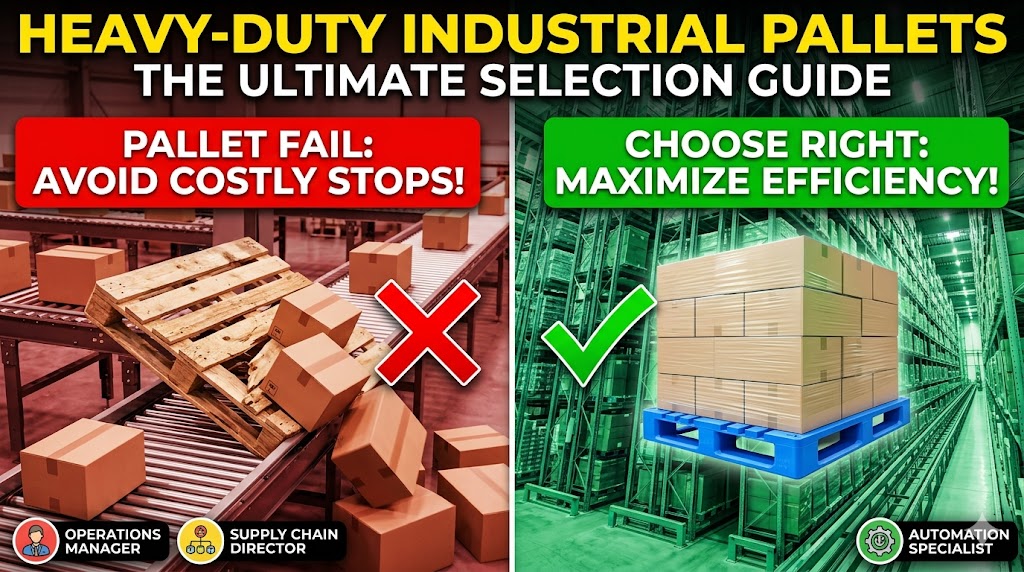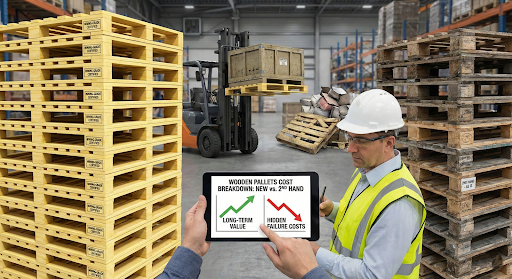

A comprehensive guide to understanding wooden pallets pricing, factors that drive costs, and how to make smart procurement decisions for your mining, logistics, or heavy manufacturing operation.
Introduction: Understanding the True Cost of Wooden Pallets
In mining, logistics, and heavy manufacturing, pallets aren’t just wooden platforms—they’re critical infrastructure for worker safety and operational efficiency. Yet many procurement managers still treat them as a commodity, choosing suppliers based purely on price per unit.
This approach often backfires. We’ve worked with dozens of logistics managers who experienced pallet failures mid-operation, causing product damage, worker injuries, and failed safety audits. The cost of a collapsed pallet far exceeds the “savings” from buying cheap pallets.
This guide breaks down the true cost of wooden pallets, compares new pallets versus reconditioned 2nd hand pallets for sale, and shows you how to negotiate better deals without compromising on safety and durability.
Key Insight: A 25% lower unit price isn’t a win if the pallets fail and cause a R50,000+ production shutdown or, worse, a workplace injury.
About This Article
Written by supply chain professionals with 15+ years of experience in mining and logistics procurement. This guide is based on real procurement data, industry standards, and feedback from facility managers across Secunda, Witbank, Middelburg, and Rustenburg industrial hubs.
What Factors Drive Wooden Pallets Cost?
The price of wooden pallets isn’t random. Six key factors determine what you’ll pay per unit, and understanding them helps you negotiate smarter and avoid overpaying for sub-standard stock.
1. Raw Timber Costs (Lumber Market Volatility)
Pine and hardwood prices fluctuate based on global supply chain pressures, seasonal harvesting, and import/export tariffs. When timber prices spike, pallet manufacturers pass the cost downstream. This is why annual supply contracts are valuable—they lock in pricing even if lumber costs rise mid-year.
Mining-grade pallets use denser, more expensive wood because it withstands repeated heavy loads and resists rot in harsh warehouse conditions. Budget pallets use softer wood that warps and splits when exposed to temperature changes and moisture.
2. Load Capacity and Structural Rating
A standard pallet holds 500kg. Your heavy pumps, drill components, and industrial equipment need pallets rated for 1-ton+ loads. This requires:
- Reinforced stringers: Thicker center supports to prevent bowing
- Premium decking: Close-spaced boards reduce product sag
- Precision engineering: Consistent thickness and nail/fastener placement
A 1-ton pallet costs 30-50% more than a standard pallet, but the safety and operational benefits justify the expense.
3. Treatment and OHS Compliance
Pallets for export or high-risk environments require:
- ISPM 15 heat treatment: Kills insects and pathogens (required for international shipments)
- Fumigation certification: Adds cost but is mandatory in regulated industries
- Splinter-free finish: Sanding and sealants prevent injuries and product damage
- No chemical residue: Food-grade or pharmaceutical-grade pallets command premium pricing
These treatments add R15-R50 per pallet but are non-negotiable in mining and manufacturing where worker safety is audited regularly.
4. Size and Customization
Standard sizes (1200x1000mm, 1200x1200mm) are most economical. Custom sizes for specific racking systems or transport containers cost 15-30% more because:
- Setup time on production lines increases
- Tooling and die costs must be absorbed
- Minimum order quantities are higher for custom specs
Pro tip: Standardize your pallet sizes across all operations. Using just 2-3 standard sizes can reduce per-unit costs by 20%.
5. Delivery and Logistics
Distance from manufacturing facility to your site heavily impacts total cost:
- Local suppliers (Secunda, Witbank): Lower transport costs, faster delivery
- Regional suppliers: Moderate transport, 3-5 day lead times
- National suppliers: Higher transport, but more stock options
A local manufacturer can deliver 500 pallets in 2-3 days; a national supplier might take 10 days. When your mine production line stops waiting for pallets, the cost difference becomes insignificant.
6. Order Volume and Supplier Relationships
Volume discounts are substantial in the pallet business:
- 1-100 pallets: No discount (list price applies)
- 101-500 pallets: 10-12% discount
- 500+ pallets: 15-25% discount
- Annual contracts (1,000+ pallets): 20-35% discount + price lock
Loyal suppliers often offer emergency rush delivery at no extra cost because they know you’ll order steady volume throughout the year.
New vs. 2nd Hand Pallets: Complete Comparison
Both new and reconditioned pallets have legitimate uses in industrial operations. The key is matching pallet type to application.
New Wooden Pallets: Full Specification
Price Range: R180–R350 per pallet (depends on size, load rating, and treatment)
Advantages:
- Full manufacturer warranty and compliance certification
- Consistent quality—no hidden structural weaknesses or rot
- ISPM 15 heat treatment available for export requirements
- Custom sizes and heavy-duty options available on request
- Zero risk of splinters or safety hazards in audits
- Predictable lifespan: 3-5+ years in industrial use
- Better stacking strength for multi-level warehouse storage
Disadvantages:
- Higher upfront cost per unit
- Minimum order quantities sometimes required for custom specs
- Lead times can stretch during peak demand (harvest season)
Best For: Heavy industrial loads, export shipments, safety-critical applications, and when you can’t afford downtime from pallet failure.
2nd Hand (Reconditioned) Pallets: Full Specification
Price Range: R80–R150 per pallet (reconditioned pallets inspected for quality)
Advantages:
- 40-60% cost savings vs. new pallets—significant budget impact
- Environmentally sustainable choice (reuse over disposal)
- Often available for immediate pickup (no lead time)
- Suitable for internal warehouse transfers and light-duty use
- Good option for mixed fleets (new for critical loads, used for internal ops)
Disadvantages:
- Variable quality—requires hands-on inspection before purchase
- Lower load capacity than equivalent new pallets (typically 300-500kg)
- Risk of hidden rot, splits, or structural weakness
- Not suitable for export (no treatment certification)
- No warranty—”as-is” sales are standard
- May have splinters or cosmetic damage
- Shorter lifespan: 12-24 months typical in heavy-use environments
Best For: Light-duty storage, one-way shipping, temporary warehouse transfers, internal logistics, and when budget constraints are primary.
| Feature | New Pallets | 2nd Hand Pallets |
| Price Per Unit | R180–R350 | R80–R150 |
| Load Capacity | 1–1.5 tons | 300–500kg |
| Lifespan | 3–5+ years | 12–24 months |
| Quality Guarantee | Full warranty | None (“as-is”) |
| Export Certified | Yes (ISPM 15) | No |
| Safety Audit Risk | Low | High (splinters, rot) |
| Lead Time | 3–10 days | Same-day pickup |
| Customization | Available | Limited/None |
Why Mining-Grade Pallets Matter: The Real Cost of Failure
Here’s what we’ve learned from working with mining and logistics teams: buying pallets that aren’t rated for your loads is a false economy.
A Real Example: The Cost of Cheap Pallets
One logistics manager at a Middelburg engineering plant saved R2,500 by purchasing budget pallets for a shipment of heavy pump assemblies (800kg each). The pallets arrived on-site, and during a routine lift-check by the forklift operator, the bottom stringers collapsed. The pump crashed onto the warehouse floor, causing:
- R28,000 in damaged equipment
- Production shutdown (3-day delay waiting for replacement)
- Lost contract penalty (R15,000)
- Near-miss incident report filed with regulators
- Safety audit findings (non-conformance on pallet standards)
Total cost: R43,000+ vs. a R7,500 investment in proper mining-grade pallets.
What “Mining-Grade” Actually Means
Mining-grade (or industrial-grade) pallets meet these specifications:
- Minimum 1-ton load rating with safety factor of 4:1 (can handle 4 tons in test conditions)
- Kiln-dried hardwood that resists warping and rot
- Reinforced stringers with 50x100mm minimum dimensions
- Grade A decking with no knots, splits, or defects larger than 5mm
- Structural testing certification from independent laboratory
- OHS compliance documentation for South African standards
Yes, they cost more upfront. But when your equipment is worth R50,000+, the insurance against failure is worth every extra rand.
Safety Audit Tip: During OHS audits, inspectors specifically look for evidence of pallet quality and maintenance. Splinters, rot, or non-standard sizes are instant audit findings. Mining-grade pallets with certification pass audit scrutiny every time.
How to Save Money on Bulk Orders: Procurement Strategies That Work
You don’t need to choose between quality and cost. Here are field-tested strategies that logistics managers use to reduce pallet spending by 20-35% without compromising safety.
Strategy 1: Negotiate Annual Supply Contracts
Instead of spot-buying pallets as needed, commit to an annual volume and lock in pricing.
- Typical negotiation: “We need 500-1,000 pallets annually. What volume discount do you offer?”
- Standard discount: 20-30% off list price
- Additional benefits: Priority fulfillment, emergency rush orders at standard rates, quarterly price reviews instead of annual renegotiation
- Risk mitigation: If you overestimate volume, most suppliers allow 10-15% variance without penalty
Strategy 2: Standardize Pallet Sizes
If your operation uses 5+ different pallet sizes, you’re paying custom pricing on each. Consolidate to 2-3 standard sizes:
- 1200x1000mm (most common industrial standard)
- 1200x1200mm (European standard, good for multi-load racking)
- One custom size for your specific heavy-duty loads (if absolutely necessary)
Cost savings: 15-20% from eliminating custom tooling and setup time.
Strategy 3: Mixed Fleet Approach
Don’t buy all new pallets or all used pallets. Use a targeted mix:
- 60% new, mining-grade pallets: For loads over 500kg, export shipments, and high-risk applications
- 40% reconditioned pallets: For internal transfers, light-duty storage, and temporary use
Cost savings: 20-25% vs. buying all new pallets, with maintained safety for critical operations.
Example calculation for a 500-pallet order:
- 300 new pallets @ R250 = R75,000
- 200 used pallets @ R100 = R20,000
- Total: R95,000 (vs. R125,000 for all new)
Strategy 4: Work with Local Manufacturers
Manufacturing hubs like Secunda, Witbank, and Rustenburg have local pallet suppliers who:
- Eliminate middleman markups (15-25% savings)
- Offer faster fulfillment (same-day or next-day delivery for large orders)
- Provide emergency rush orders without premium pricing
- Understand local OHS regulations and industrial requirements
Strategy 5: Negotiate Volume Tiers and Minimum Orders
Ask your supplier:
- “What’s your pricing for 100, 250, 500, 1,000 pallets?”
- “Can you offer quarterly discounts if we commit to minimum monthly volumes?”
- “What’s your emergency rush rate for orders placed with 48 hours’ notice?”
Many suppliers have hidden flexibility in pricing once you ask the right questions.
Strategy 6: Pallet Pooling and Return Programs
Some suppliers offer pallet pooling services where:
- You rent pallets instead of buying them outright
- The supplier handles repairs and replacement
- Lower upfront capital expenditure
- Ideal for fluctuating pallet demand
Common Procurement Mistakes to Avoid
Mistake 1: Buying Based on Unit Price Alone
A pallet that costs R50 less but fails after 6 months isn’t a bargain—it’s a liability. Always factor in durability, warranty, and long-term cost-per-use.
Mistake 2: Not Inspecting Used Pallets Before Purchase
“As-is” sales mean you own the risk. Always physically inspect reconditioned pallets for rot, deep splits, and structural issues. Don’t accept delivery of pallets you haven’t seen.
Mistake 3: Ignoring Lead Times and Emergency Costs
Buying from a distant national supplier might save 5% per unit, but the 10-day lead time forces you to pay rush delivery premiums when you run out unexpectedly. Local suppliers save money through reliability.
Mistake 4: Neglecting OHS Compliance Documentation
During a safety audit, you can’t prove your pallets are compliant without certification. Request compliance documentation from your supplier before signing a contract.
Mistake 5: Over-Ordering Custom Sizes Without ROI Calculation
Custom pallets make sense only if they solve a genuine operational problem. If you’re considering a custom size for a one-time use, rent or buy standard pallets instead.
Frequently Asked Questions: Wooden Pallets for Sale
Q: How much do wooden pallets cost per unit in South Africa?
New pallets: R180–R350 depending on size and load rating. Reconditioned 2nd hand pallets for sale: R80–R150. Bulk orders (500+) and annual contracts attract 20-35% discounts.
Q: Can I use 2nd hand pallets for export shipments?
No. Export requires ISPM 15 heat treatment certification, which used pallets don’t have. Use only new, certified pallets for international shipments.
Q: What’s the difference between standard and mining-grade pallets?
Standard pallets hold 500kg; mining-grade pallets are rated 1-1.5 tons with reinforced structure, kiln-dried wood, and structural certification. Mining-grade pallets cost 30-50% more but are non-negotiable for industrial heavy loads.
Q: How long do wooden pallets last?
New pallets: 3-5+ years in industrial use. Used pallets: 12-24 months. Lifespan depends on load type, climate, storage conditions, and maintenance.
Q: Can I negotiate lower prices on single pallet orders?
Rarely. Volume discounts start at 100+ pallets. For single-unit orders, expect to pay list price. Budget your pallet purchases in batches to unlock discounts.
Q: Where should I source pallets if I’m in Secunda or Witbank?
Contact local manufacturers first—they offer the best pricing, fastest delivery, and best understand industrial requirements. Avoid national retailers for bulk orders.
Q: Are wooden pallets recyclable?
Yes, wooden pallets are highly recyclable. At end of life, they can be reclaimed for lumber, mulch, or fuel. This sustainability angle is a valid cost benefit for budget-conscious companies.
Q: How do I ensure pallets meet OHS compliance?
Request compliance certification from your supplier. Mining-grade pallets should come with load rating testing documentation, splinter-free finishing verification, and treatment certification (if applicable).
Final Thoughts: Smart Procurement Starts Here
The true cost of wooden pallets isn’t just what’s on the invoice. It’s the total impact on safety, operations, compliance, and long-term durability. When you factor in all these elements, mining-grade new pallets—especially when bought in bulk with annual contracts—deliver better ROI than penny-pinching on budget alternatives.
Your next step: Audit your current pallet inventory. Are you using the right type for each application? Could a mixed fleet or annual contract reduce spending? Are your pallets putting workers at risk during safety audits?
If you operate in Secunda, Witbank, Middelburg, or Rustenburg and need mining-grade, OHS-compliant pallets, connect with a local manufacturer who understands your industrial requirements. The difference in quality, delivery speed, and peace of mind is worth every conversation.